How to Win at Mimic the Voice
Nail pitch and rhythm, survive star politics—even on owner servers—and route badges without wasted sessions.
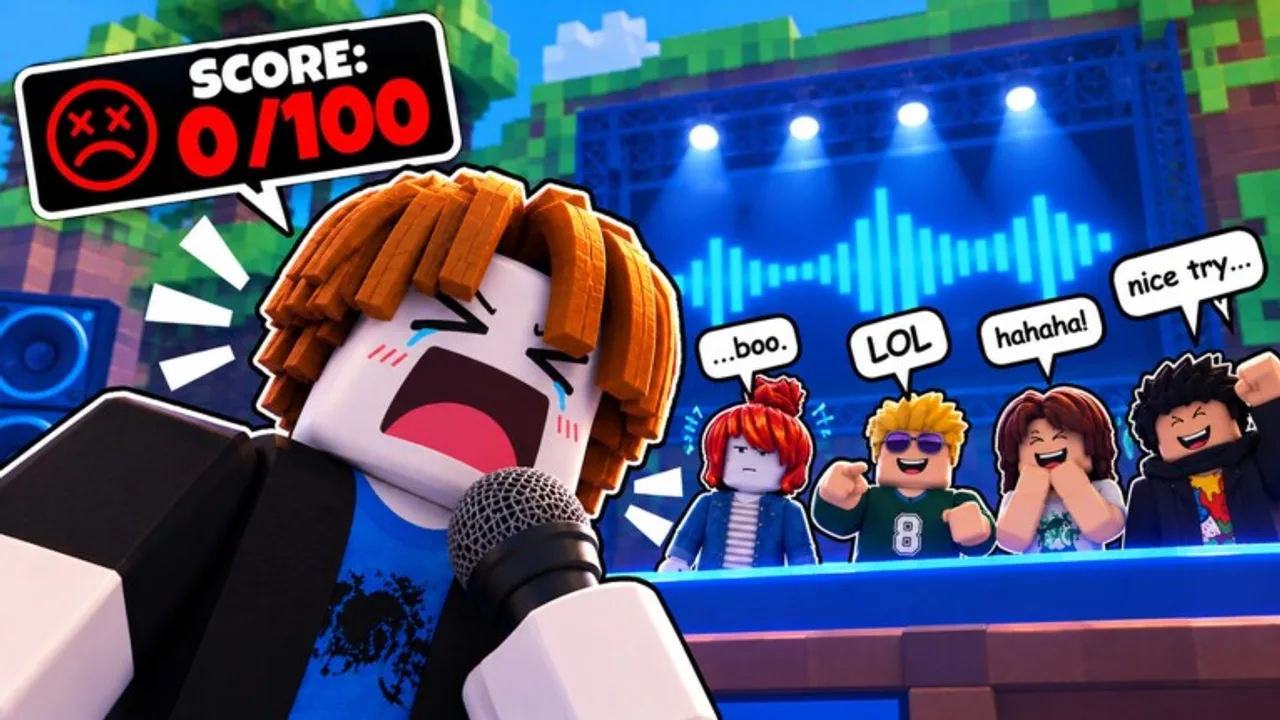
Winning is two meters glued together
Every Mimic the Voice round blends an automatic rhythm + pitch score with live star ratings from other players. Champions treat both halves seriously. You can out-sing the cue and still sink if the lobby hears a silent or unserious take — or survive a slightly imperfect pitch line if your timing feels intentional and the crowd is generous.
Prerequisites: you already know the loop from how to play, Voice Chat works (guide), and your input is clean (mic setup). This page assumes those greens.
Pitch tips that actually move the needle
- Find the home note first. Hum the first stable pitch under your breath before you fully commit.
- Stay in the cue’s register. Jumping an octave for drama rarely fools the scorer.
- Slide only when the cue slides. Flat sustained tones want flat sustained mimics.
- Avoid scooping into every note. Pop-style scoops add pitch error on short cues.
- If you are unsure, simplify. A confident outline of the melody beats a cluttered improvisation.
- Use a soft countdown. Mentally count “1-and-2” with the rhythm so pitch changes land on time.
Players chasing Pitch Perfect / Spot On style badges should review their worst cue types (speech snippets vs pure tones vs effect-heavy clips) and drill those in casual lobbies. After QOL + MORE, expect unfamiliar entries in the sound pool—warm up before streak nights (QOL + MORE).
Rhythm tips
- Start with the groove, not after a panic breath that eats the downbeat.
- Clap the pattern once on your thigh during the listen phase if movement helps you remember.
- Match rests. Silence in the middle of a cue is part of the score — do not fill it with nervous laughter unless the cue itself is laughter.
- End cleanly. Trailing hums look like missed cutoffs.
- Compensate for Bluetooth latency by anticipating slightly; if you cannot, switch to wired for serious streak attempts.
New sound pool (QOL + MORE)
The official event bullets include NEW SOUNDS beside NEW SKINS and QOL FEATURES. Practical impact:
- August muscle memory will miss September adds—spend one match just listening.
- Owner hosts can hand-pick which sounds appear; a comedy playlist is not a fair exam for Pitch Perfect.
- When a cue is brand new to you, prioritize timing outline over vocal acrobatics.
- Compare cue cultures with sibling party games only for fun shopping—see vs Make That Sound—then come back to this loop.
Keep soundboard ethics in mind: external boards that play the answer for you are not “skill,” and they can ruin lobbies even when they technically work.
Owner servers, jumpscares, and star-rigging politics
QOL + MORE marketing leans into owner power: hosts pick the sounds, can rig the stars, and can jumpscare performers mid-note. Full host toolkit: owner servers.
How that changes “winning”
| Lobby type | What “good play” means | Badge safety |
|---|---|---|
| Public / unrigged | Clean pitch + fair stars | Best for Spot On, Crowd Pleaser, streaks |
| Friends owner (fair stars) | Same skills, curated sounds | Fine for practice |
| Chaos owner (rigged stars / jumpscares) | Entertainment and clips | Poor for honest rating badges |
Star-rigging politics: if the host is inflating friends or bombing outsiders, your social half of the score is no longer a skill check. Laugh, clip it, then hop. Habitual 1-star bombers in public lobbies are still worth avoiding—people mirror spite.
Mid-note jumpscares: treat them like stage hazards. Keep performing through the scare if you can; panicked silence reads as AFK. If jumpscares make you flinch-mute, practice once on a friends server before caring about the result.
Hosting tip: if you want competitive friends night, pick sounds but leave stars honest. Save full chaos for after badge goals are done.
Star politics (without being toxic)
Star ratings are social. Soft skills matter:
- Commit visibly. Even a hard cue deserves a full try; half-muted shrugs get punished.
- Be a fair voter. People notice habitual 1-star bombers and mirror them.
- Comedy has a ceiling. A funny fail can score mid-stars once; repeating the same bit every round signals you are not competing.
- Know the lobby. Friend groups, owner chaos tables, and random publics rate differently. Adjust risk.
- Never AFK on stage. That is the fastest way to donate a free elimination.
When you rate others, ask: “Did they attempt the shape of the sound?” Reward attempts that are close even if imperfect — the culture you vote for is the culture that votes for you.
Elimination survival strategy
Early rounds: play safe and clear. You only need to not be last. Mid rounds: start taking slightly braver pitch matches when cues are simple to bank goodwill. Final two: optimize for your personal strength. If your pitch is stronger than your comedy, stay musical; if the lobby is meme-heavy and your pitch is shaky, lean into a bold but on-time performance rather than a timid mumble.
Remember server size caps at 10 — you will not face endless brackets. Focus on consistency across four to six turns rather than one viral moment.
Streaks, rematches, and mental reset
Badges like Encore, Hat Trick, and Unstoppable reward repeated excellence. Practical streak advice:
- Warm up with one low-stakes match before a streak hunt—especially after NEW SOUNDS land.
- Re-check mic mute between games — most “mystery losses” are mute accidents.
- Skip owner jumpscare servers during Unstoppable pushes.
- After a tilt elimination, take sixty seconds. Requeueing angry makes you rush rhythm.
- Hydrate; dry throat wrecks pitch more than players admit.
Win streaks also feed ego stats and rematch energy. Stop on a win if your voice is tired — Marathon / Veteran style grind is a calendar project, not a single hoarse night. Living Legend (250 wins) still shows 0 awards at research time—treat it as a season project (badges).
Daily rewards and economy discipline
Claim daily rewards whenever the lobby offers them (daily rewards). During QOL + MORE, also claim any event free Rewards—those are lobby/event grants, not invented promo codes (codes). Money and Gems gate Style unlocks (titles, trails, mic skins, voice effects), including NEW SKINS from the event (cosmetics).
VIP (199R$) doubles Money and adds +15% Gems plus VIP Title/Trail — buy it if you already play daily, not as a substitute for practice.
Spending order that supports winning:
- Keep currency for cosmetics you will actually equip (confidence is real).
- Consider Party Voices Pack (149R$) or Chaos Voices Pack (299R$) only after you can win on default audio — effects are spice, not skill.
- Avoid blowing everything on impulse trails before you own a mic skin you like on recordings.
Group codes may inject free currency later; redeem via the how-to-redeem flow when shouts appear. Do not stall your practice waiting for codes that are not public yet.
Badge grind routing
| Badge vibe | How to route it |
|---|---|
| Welcome / Mic Ready / Stage Fright | Automatic with setup + first turn |
| First Win / Rising Star | Focused queues; play for finals, not jokes |
| Crowd Favourite / Crowd Pleaser / Living Legend | Consistent high stars — fairness + clean audio; avoid rigged owner tables |
| Spot On / Pitch Perfect | Cue drilling on the current sound pool; headphones; no speaker bleed |
| Encore / Hat Trick / Unstoppable | Streak sessions on fresh voice; public lobbies |
| Regular / Marathon / Veteran | Calendar playtime; short daily sessions beat burnout |
| Dressed Up / Wardrobe | Style completion; audit NEW SKINS during the event |
Track what you still lack on badges, then pick lobbies that serve that goal. Wardrobe nights are different from Unstoppable nights.
Advanced habits
- Listen like a transcriber. Mentally label “two short — one long” instead of vaguely “idk funny noise.”
- Watch winners while eliminated. Note how much air they take before starting.
- Limit stacked effects. Echo Chamber + bad room EQ can smear attacks.
- Protect sleep. Pitch accuracy falls off a cliff when you are exhausted.
- Teach one friend the mic checklist. Better lobbies raise everyone’s star quality.
Example “serious session” plan (45 minutes)
- Five minutes: VC + mic confirmation, daily / event Rewards claim, Style equip (check NEW SKINS).
- One warm-up match on the current sound pool: experiment, no streak stress.
- Two focused public matches: aim for finals; note missed cue types.
- Optional fourth match only if voice feels fresh—and only if the server is not star-rigged.
- Log one improvement note (e.g., “late on new speech cues”) before logging off.
Related pages
Clean input, on-time pitch, fair stars, and the right lobby type — that combo wins more than any Chaos pack or jumpscare bit alone.
Frequently Asked Questions
Quick answers to the most common questions.
Is the auto score more important than star ratings?
Both matter. Treat rhythm and pitch as your floor, then use a committed performance and fair voting culture to lift stars—unless you are on a deliberately rigged owner server.
How do owner servers change winning?
Hosts can pick sounds, rig stars, and jumpscare mid-note. Great for parties and clips; poor for honest Crowd Pleaser or streak badges. Hop to public lobbies for serious grinds.
What is the fastest way to improve pitch?
Headphones, a quiet room, and humming the home note before you perform. Simplify hard cues—and re-warm after NEW SOUNDS drop—instead of improvising extra notes.
Should I buy VIP to win more?
VIP speeds Money/Gems and adds flair, but it does not change scoring rules. Buy it for progression comfort after your mic fundamentals are solid.
How do I farm streak badges?
Warm up first, avoid mute mistakes, skip jumpscare-rigged owner servers, play while your voice is fresh, and stop when tilt or fatigue shows.
Do voice effects help winning?
Sometimes they entertain raters, but muddy effects can hide articulation. Master default clarity before relying on Demon, Alien, or Echo Chamber.