Owner Servers in Mimic the Voice
Private-style host powers from the QOL + MORE event — and how they change the way you practice and compete.
Why owner servers matter now
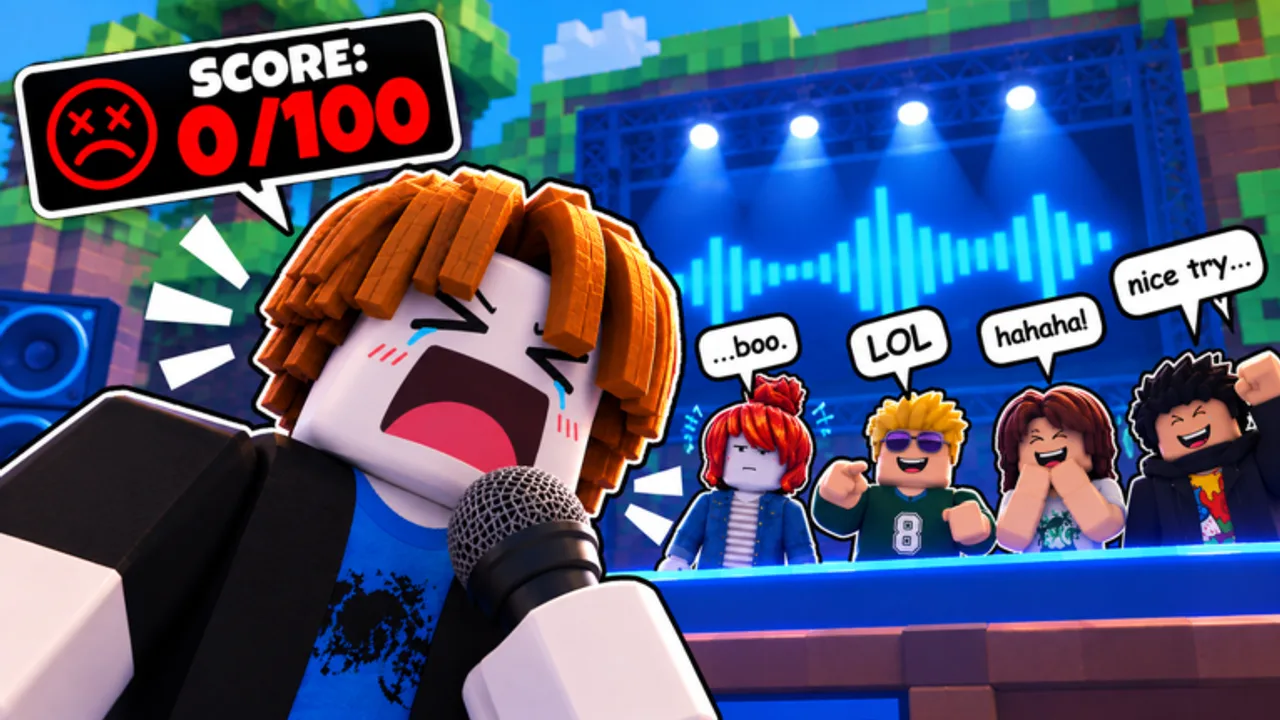
Public Mimic the Voice lobbies are chaotic by design: random cues, mixed skill levels, spite stars, and ten players fighting for one crown. The QOL + MORE event window (20–27 September 2026) spotlighted owner-controlled / private-style servers alongside NEW SKINS, NEW SOUNDS, and broader QOL work. Official event messaging called out host tools that let you pick sounds, rig stars, trigger a jumpscare mid-note, and lean into free Rewards while friends stay in the room.
This guide explains what those powers change strategically. It assumes you already know the public loop from how to play and want cleaner practice or curated party nights. For the dated event snapshot, keep QOL + MORE open beside this page.
Voice Chat is still required to compete. Owner tools do not replace a working mic — they only change who controls the stage rules.
What “owner server” means here
Think of an owner server as a host-directed lobby rather than a fully fair public queue. Someone with ownership or private-server control can shape the session instead of accepting whatever the random matchmaker throws at you. In the QOL + MORE tagline, that shaping shows up in four player-facing ideas:
- Pick sounds — choose which cues the lobby hears instead of rolling pure random.
- Rig stars — influence or stage the star-rating side of scoring for comedy, challenges, or practice.
- Jumpscare mid-note — inject a scare beat while a performer is mid-take.
- Free Rewards — event / host-facing reward framing so private nights still feel generous.
Exact UI labels can shift after the event week. Treat the list above as the official fantasy of the feature set, then verify the live buttons in your build. Do not invent admin panels that the game never shipped.
Pick sounds: curated drills vs public roulette
In public servers you adapt to whatever cue lands. That is great for transferable skill and badges that reward consistency under surprise. On an owner server, picking sounds flips the session into a drill lab:
- Warm friends on speech snippets before animal noises.
- Repeat the same hard pitch contour until everyone nails the home note.
- Build a “meme night” playlist of cues that the group loves.
- Isolate cue types that tank your auto score (short attacks, silence gaps, sliding pitches).
Strategy tip: if your goal is a public Unstoppable streak later, do not only practice owner-curated easy packs. Mix curated drills with at least one fully random public match so your ear stays flexible. Pair this with the pitch and rhythm habits on how to win.
Rig stars: social rules become explicit
Public star ratings are politics. Owner tools that rig stars make that politics visible. Hosts can run modes where stars are loosened for comedy, tightened for serious finals, or staged so everyone understands the night’s social contract.
Use that power carefully:
- Practice nights: soft stars so shy players finish takes without spite bombs.
- Tournament nights: announce fair voting before round one; do not surprise-rig after someone already performed.
- Content nights: if you are recording, tell guests whether stars are real competition or bit material.
Rigging does not teach pitch. It teaches lobby culture. The players who improve fastest still listen like transcribers and deliver clean mimics — they just stop wasting turns on toxic public stacks.
Jumpscare mid-note: chaos as a feature
A jumpscare mid-note is the opposite of a quiet practice room. Dropping a scare while someone is performing breaks concentration, wrecks breath support, and turns a clean mimic into a scream clip. That is hilarious for parties. It is terrible for badge grinding.
House rules that work:
- Ban mid-note jumpscares during streak attempts.
- Allow them only in designated “chaos rounds.”
- Never use them to bully a guest who already has stage fright — Stage Fright is a badge, not a personality test.
If your group wants scare energy without destroying fundamentals, scare between takes, not during the scored window.
Free Rewards and event framing
QOL + MORE also pushed NEW SKINS, NEW SOUNDS, QOL polish, and free Rewards language around owner / event play. Private nights are a good time to claim dailies, show new cosmetics, and let newer friends hear fresh cue packs without fighting a full public server for turns.
Still join the official group for codes when shouts appear — see the Codes Hub. Owner servers are not a substitute for group rewards; they are a better room to enjoy them in.
Strategy: owner server vs public lobby
| Goal | Prefer owner / private-style | Prefer public |
|---|---|---|
| Teach a friend the loop | Yes — curated sounds, soft stars | Only after VC works |
| Drill one weak cue type | Yes — pick sounds on repeat | Too noisy |
| Film a clean tutorial | Yes — control chaos tools | Risky |
| Earn transferable win rate | Warm up private, then queue public | Required stress test |
| Chase spite-proof mental game | Occasional public | Primary |
| Party / jumpscare night | Yes — with consent rules | Mixed strangers |
A strong weekly plan: one owner session for drills and cosmetics flex, two public matches for real elimination pressure. That combo beats living forever in either mode.
Host etiquette checklist
- Confirm every guest has Voice Chat and a working mic before “serious” rounds (mic setup).
- State whether tonight is practice, tournament, or chaos.
- Announce if stars will be rigged or left organic.
- Ask before mid-note jumpscares.
- Rotate stage time so the same loud friend is not always first.
- Kick griefers who mute-bait or dump 1-stars after agreeing to fair play.
Good hosts create the lobby culture that how to win assumes: committed takes, fair ratings, and clean audio.
Common mistakes
- Treating owner tools as a way to farm public-looking stats unfairly, then acting shocked when public lobbies feel harder.
- Only picking easy sounds, then blaming the auto scorer in random queues.
- Using jumpscares as harassment.
- Ignoring QOL mic / UI fixes from the same update — re-test setup after big patches (QOL + MORE).
- Inviting friends who cannot enable VC, then wondering why turns stall.
Related pages
Owner servers are a stage manager’s toolkit. Use them to teach, drill, and party — then prove the same skills where the sounds are not hand-picked.
Frequently Asked Questions
Quick answers to the most common questions.
When did owner servers get highlighted?
During the QOL + MORE event window from 20–27 September 2026, alongside NEW SKINS, NEW SOUNDS, QOL features, and free Rewards messaging.
What can an owner server host control?
Event tagline powers include picking sounds, rigging stars, triggering a jumpscare mid-note, and framing free Rewards. Verify live UI labels in your build.
Are owner servers better for learning than public lobbies?
Yes for drills and teaching. Still play public matches so random cues and real star politics do not surprise you later.
Should I allow jumpscares during ranked-feeling games?
Only with group consent and preferably outside serious streak attempts. Mid-note scares wreck pitch and rhythm on purpose.
Do owner servers remove the Voice Chat requirement?
No. You still need Voice Chat to compete. Host tools change lobby control, not the mic requirement.
Where do I read the wider September update notes?
See the QOL + MORE update page for verified event signals, then return here for private-lobby strategy.